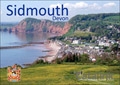
Sidmouth is a beautifully preserved seaside town on the Devon coast, nestled where the River Sid meets the sea between the dramatic red sandstone cliffs of Peak Hill and Salcombe Hill. Known since the Domesday Book as "Sedemuda" (mouth of the Sid), it grew from a medieval fishing village into one of England&s most admired Regency resorts, and today sits at the gateway to the UNESCO Jurassic Coast World Heritage Site within the East Devon Area of Outstanding Natural Beauty.
During the early 19th century Sidmouth attracted wealthy visitors seeking the fashionable new sea-air cure, and the elegant terraces and villas built to accommodate them still define the townscape today. In 1819 the infant Princess Alexandrina, the future Queen Victoria, visited with her parents the Duke and Duchess of Kent; her father died of pneumonia during the stay at Woolbrook Glen, which later became the Royal Glen Hotel. The poet Sir John Betjeman, Poet Laureate 1972-84, fell under the town&s spell and in 1962 wrote his poem Still Sidmouth, describing it as "a town caught still in a timeless charm" — four lines from the poem are now inscribed on a plaque in the Connaught Gardens.
Sidmouth&s famously red cliffs are composed of Triassic Otter Sandstone, part of the same 185-million-year geological story that earned the East Devon and Dorset coastline UNESCO World Heritage status in 2001. Above the town, Connaught Gardens offer sheltered terraces with sea views, while the surrounding East Devon hills provide waymarked walks through the Sid Valley. The wide Regency esplanade runs the length of the beach, making Sidmouth equally enjoyable on foot in every season.
Every August since 1955 Sidmouth has hosted its internationally renowned Folk Festival, founded by the English Folk Dance and Song Society and now drawing more than 65,000 visitors to over 700 events spanning concerts, ceilidh dances, workshops, and sessions in the town&s pubs and open spaces. The Norman Lockyer Observatory on Salcombe Hill, established in 1912, reflects the town&s long history of scientific interest. A large part of Sidmouth is designated a conservation area, protecting the intact Georgian and Regency streetscapes that make it one of the best-preserved resort towns in England.
Sidmouth lies on the south Devon coast approximately 14 miles east of Exeter, reached via the A3052. The nearest mainline railway station is Honiton (about 8 miles north), with regular bus connections into town. Exeter International Airport is around 20 miles away.
Yes. The town has a safe shingle and sand beach, a gentle esplanade ideal for walking and cycling, public gardens, and a range of cafes and independent shops. The annual Folk Festival in the first week of August includes dedicated family and children&s programmes.
The Jurassic Coast is a 95-mile stretch of East Devon and Dorset shoreline designated a UNESCO World Heritage Site in 2001 for its continuous sequence of Triassic, Jurassic, and Cretaceous rock formations. Sidmouth sits within the Triassic section; its distinctive red cliffs are formed from ancient desert sandstone roughly 240 million years old.
She did, as an infant. In the winter of 1819-20 her parents, the Duke and Duchess of Kent, brought the future queen to Woolbrook Glen (now the Royal Glen Hotel) for the sea air. The Duke of Kent died there in January 1820; Victoria went on to become queen in 1837 and reigned until 1901.
Founded in 1955 by the English Folk Dance and Song Society, the Sidmouth Folk Festival is one of the largest and most celebrated folk events in the UK. Held in the first week of August each year, it encompasses major concerts, pub sessions, craft workshops, dance displays, and a youth programme called Shooting Roots, which has nurtured emerging folk artists since 1995.
The town retains several of its original Regency and Victorian hotels, including grand seafront properties dating to the resort&s heyday. Independent restaurants, cafes, and tea rooms line the town centre, with many specialising in locally caught fish and classic West Country cream teas.
Note: this brochure is from our archive. Details such as prices, availability, and contact information may be out of date. We recommend checking the latest information directly with the relevant tourism authority or accommodation provider before planning your visit.

This brochure is no longer available
The Visit Sidmouth Brochure brochure has been archived — details above are kept for reference. Browse similar live offers available free today.
Browse Live Brochures →